





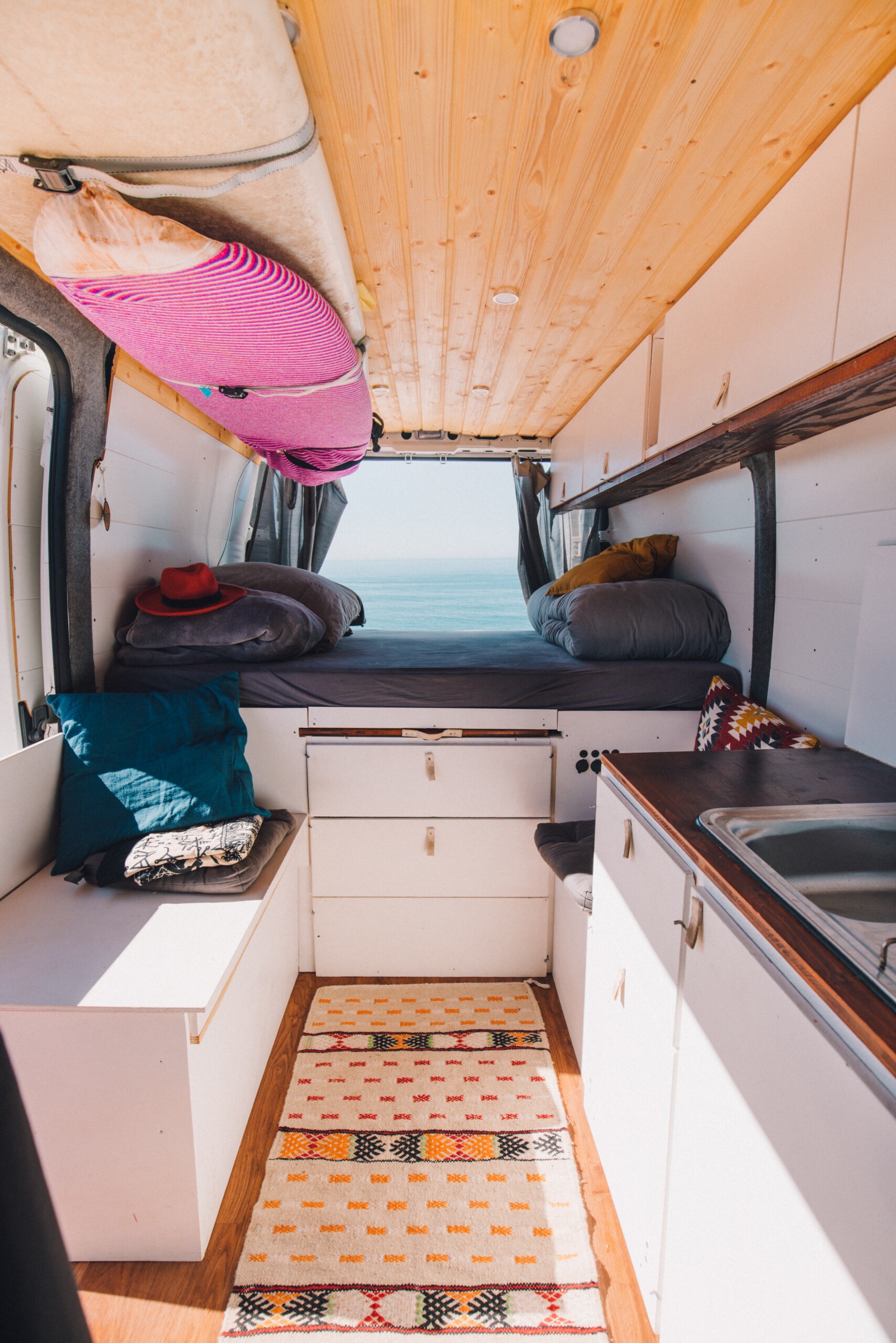
Converting a van to a camper is your passport to a piece of the #vanlife action. Blow those cares away out the exhaust pipe. You can go down the pre-converted van route, or have a crack at doing it yourself, at least partly, and rope in professionals for the fiddly technical bits, electrics and gas.
Converting a van yourself can also be the most cost-effective way of doing it.
You’ll need a place to store it once your conversion is complete, and we have the best caravan and motorhome storage right in the heart of Dumfries.
How to choose the right van to convert to a camper
Take a hot insider tip from us when converting a van into a camper.
Try as many different shapes and sizes of vans as you can. Not only are you road-testing it, but the bed, kitchen, and general layout, etc. They vary wildly, so get searching for that sweet spot.
If you have grand plans for as close to a home on wheels as is possible, then the big guns (Mercedes, Ford, Volkswagen) have magnificent beasts with oodles of space for beds, kitchens, storage and the like.
They, of course, suit longer trips or full-time van lifers best, although they’re not that easy to manoeuvre or park.
Medium-sized vans are great for all you weekend adventurers who don’t venture too far from UK touring, hopping over to Europe now and then. They strike a good balance between living space considerations and practicality.
We’re sure you will always carefully inspect the van’s condition and have someone check it over if it’s a private sale, and insist on the seller surrendering its service history.
DIY campervan conversion
Fling yourself down the rabbit hole of YouTube videos, vlogs and blogs on the subject. Once you punch a hole in the side of that van or anywhere else for that matter, you had better know your onions because there’s no going back.
We know that you’re itching to get the fit done and hit the road, but a wee bit of careful planning rather than fitting minus a real plan can save time, money, and frustration on the road when ill-fitting cupboard doors fly open in transit.
Think about how you’ll mostly use the camper
Will it be mainly weekends where you head to the hills for the sound of music?
Will it be just the two of you, solo adventures, or are friends and family likely to tag along?
How extensive must your cooking facilities be? What about the toilet?
Maybe you could sketch out some rough ideas for the layout, help you visualise the space, and maximise every single nook and cranny.
As with most things, simplicity is key, and a larger comfy bed paired with a smaller kitchen area seems to be where it’s at for most camper enthusiasts.
How to insulate a campervan
Every vacation needs insulation. The right fluffy stuff ensures a snug camper when it’s parky, and shows stuffy the door when it’s cat on a hot tin roof time. It can also help keep condensation at bay – a vanlifer’s sworn enemy.
Sheep’s wool or specialist foam products are good insulation materials. Ensure that it’s installed correctly so that you max out its effectiveness. And don’t overlook the floor just because it’s down there – dastardly cold air can shimmy up through the metal base of the van.
Converting a van to a camper and electrics
How much electrical equipment to pack into your van is a big consideration. A simple setup powers lights and phone chargers, or you can amp up the current for small appliances like fridges and laptops.
Campervan conversions tend to make use of a leisure battery system that operates independently from the vehicle’s starter battery. Harness that smidgen of summer sun via solar panels that give your van a little extra oomph when parked off-grid.
You’ll need an electrician for this, of course. We don’t recommend muddling through or DIY videos if this is not in your wheelhouse. A well-wired van is a safe van.
Are converted campervans comfortable?
Your van’s interior design is the sexiest part. Time to infuse the build with your personality.
If it’s fold-away or retractable, you’ll fall in love with it. Knowing every inch of that van is being utilised ensures you go out like a light in a bed that’s got more stored under it than you might’ve ever dreamt of before you started converting your van into a camper.
It’ll shine like a multifunctional diamond, and it’s surprising how smart storage can bring a sense of spaciousness to a compact interior.
Durability is key when you’re on your material hunt.
They must withstand vibration, movement, fluctuating temperature, etc. Lighter finishes tend to suit smaller vans, while roof vents are your window on your own little piece of sky, and are marvellous for ventilation.
Campervan cooking facilities
Food is a big part of happy campervanning.
A portable stove and water container might do the trick, or you could go for fitted sinks, gas hobs and freshwater tanks. It goes without saying that all gas appliances must be fitted properly and by professionals if you’re not trained.
Think about your cooking/eating habits before investing. Many vanlifers tend to favour a straightforward kitchen space boasting the basics. It’s usually more than adequate for most trips.
Legal requirements when converting a van
Your insurer might require details of modifications and the photos to prove it. They’re most likely looking for evidence of professional installation work.
You can apply to have your new van reclassified as a motor caravan, but it must meet specific requirements. You’ll have to produce more documentation for this.
This is only a rough guide, so take some time to check the guidance to make sure your van plan is compliant before lifting a finger.
How much does a campervan conversion cost?
That’s one of the most-asked questions, and answers vary enormously.
A basic conversion can cost a few thousand pounds, and sourcing second-hand materials greatly helps keep a budget from bulging. Ditto if you lose yourself in those tutorials and manage to pull off most of the work yourself.
More high-spec conversions can run into tens of thousands. You might need a budget and a contingency budget if you plump for this type of build.
Look after your campervan and protect your investment
Conversion complete, van gleaming, you must protect it.
That’s why regular maintenance is essential. Tyres, batteries and all mechanical components require regular TLC, with long stretches in storage.
Campervan storage also protects it from theft, accidental damage and roadside or driveway wear and tear.
Sources:
National Caravan Council
Camping and Caravanning Club
Caravan and Motorhome Club
Auto Trader Vans